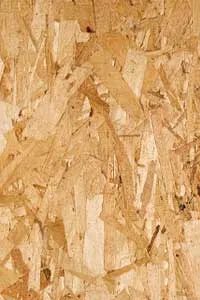
You’ve been wandering the lumber aisle lately. You need wood. You haven’t picked a species yet. But in conversations with contractors and DIYers, one name keeps coming up. Oriented Strand Board.
It’s like a secret organization. In some cases, yes. But for your next home renovation, it stands for oriented strand board.
If you are planning a project, you need to know if the material is in your garage or in your shipping container. Let’s analyze what it is. And you’ll see why it’s a smart choice for your wallet.
How to make OSB
OSB didn’t just appear out of nowhere. Developed in the late 1970s. Inventors strive to extend the life of wafer boards. The result is a combination panel that works differently than its predecessor.
The secret is in the name. “Oriented.”
With random wood chips, you get weakness. OSB uses rectangular strands. The placement of these strands is strategic. They form cross-oriented layers. This design prevents warping. It also offers water resistance.
The materials are sustainable. You are looking at fast-growing trees. Aspen. poplar. Southern yellow pine. Mixed hardwoods. Logs are cut into strands. They are dried. Then treat with wax. resin. Waterproof heat-cured binders.
The strands are grouped into big sheets. Pressurized at high temperature. The result is a uniform panel. strong. Multifunctional.
Sizes vary. Everything from 1/4 inch (6 mm) to 3/4 inch (18.5 mm) You will see. Custom sizes are also available upon request.
Where to Use Oriented Strand Board?
OSB is a very strong building material. You can use it to build almost anything. However, there are also standard applications.
- wall panels
- Roof covering
- Subfloor
- Single-layer flooring
- Structural insulation panels
- Industrial containers
- Furniture
It competes directly with plywood on the market. Same purpose. Same function. The manufacturing process is different.
OSB and plywood: the real difference
You know, plywood. It is a traditional wood composite product used in construction. OSB is newer. Some people hesitate. They’re afraid this won’t last.
Here is the truth. Both materials are very strong. Both are very durable. Both are long-lived. You don’t have to worry about performance degradation.
However, you need to choose the proper grade. Water resistance is not negotiable.
There is one critical weakness in OSB. Cutting the panel will disable the waterproofing. The edges are fragile.
The edges of OSB tend to swell when exposed to water. Plywood handles this better. However, OSB has excellent humidity. In fact, it often performs better than plywood in humid environments where the edges remain sealed.
Price is another factor.
There are no fixed prices. Fluctuations in the supply chain. However, OSB is generally cheaper. Manufacturers produce almost twice as much OSB as plywood. More supply. Low costs.
Environmental Impact
Environmentally conscious homeowners are concerned about binders.
Formaldehyde-based binders have traditionally been used in plywood. Seal the wood layer. This works. But it stinks. and potential health concerns.
OSB offers an choice. Can be sealed with formaldehyde-based binder. or binders that do not produce formaldehyde. This way you can control the quality of the indoor air.
Making the Call
So which one do you buy?
If you are sheathing a wall that will be covered quickly, OSB may be sufficient. It’s cheaper. It’s strong.
If you are building furniture that may be exposed to moisture, or if you intend to cut edges frequently, plywood may be safer. The risk of OSB swelling risk is real.
Consider your budget. Consider the environment. And always check the grades.
You are building something. Or fixing something. Materials are important. But so is the execution.
Do you trust the old standard or are you ready to try something new?
The lumber yard is open. you have the tools. The rest is up to you.


