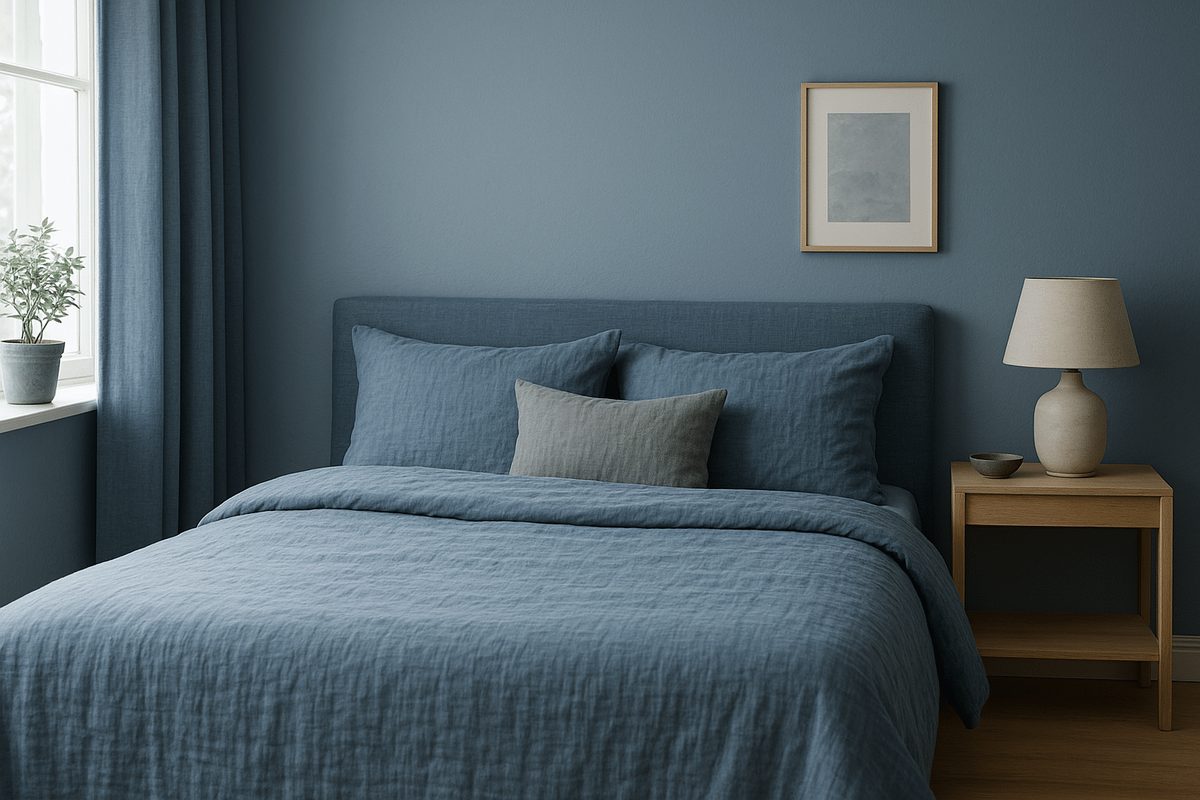
Most people blame their mattress or a late night scroll. They replace pillows. They are trying melatonin. They are obsessed with room temperature. But they ignore the walls.
The colors around you determine how your brain relaxes. This is not just a psychology. This is a biology. Light hits the retina. The signal enters the brain. These signals tell your body whether it’s time to party or take a break.
Enter a specific shade of blue. No electric blue on the screen. This is not a sterile hospital. A traditional Japanese textile using deep matte natural indigo. In Japan, this color is called “Aiiro” or simply “Ai” (indigo plant). It’s everywhere. In clothing. In pottery. And yes, in interiors.
Why is it effective? Because it mimics the sky at dusk.
It signals the end of the day without going completely dark. Black makes people feel heavy. Pressed down. Scary even. White feels awake. Alert. Indigo is in the middle. It’s soothing. It lowers the heart rate. It suggests safety.
If you feel like your bedroom is a mess, check the paint first. A wash of this soft, earthy blue can anchor the space. It reduces visual noise. When your eyes have less to process, your brain relaxes faster.
A degree in color theory is not required to apply this. All you need is a can of paint. Or heavy curtains. Or a woven rug. Start small. Test the lighting in the reading corner before going to bed. Does this color soften the harshness of the evening? If yes, you are on the right track.
This is not a magic cure. But it is a powerful tool. It’s cheaper than a new mattress. It has been used in Japan for centuries.
How to choose the best blue for sleeping
Not all blues are the same. You need the right tone. The wrong tone can wake you up. The right one will pull you under.
Look for descriptions like “slate,” “navy,” or “dusty.” Avoid brights. Avoid neon. Avoid anything with a yellow tint. You want a cool, clean blue. As if there was water at the bottom of the well.
Take home samples when you buy. Draw a big square on the wall. Watch the sun set. The color changes. Dark. You have to see how it works in the dark.
Natural indigo dyes are complex. It varies. It has depth. Synthetic paints can mimic this. But look for a matte finish. Shiny surfaces reflect light. It creates glare. Glare is the enemy of sleep. Matte walls absorb light. They create a cocoon.
Consider the source. In Japan, indigo is more than just a pigment. It’s fabric. Aizome dyeing is a traditional craft. Produces colors that fade beautifully over time. It develops a patina. You can also bring this feeling to your home through textiles.
Blue duvet cover. A woven blanket. These add texture. The texture adds comfort. Comfort supports sleep.
Why dark blue calms the nervous system
This depends on the wavelength of the light. Blue light
The science behind Japan’s muted blue-grey color
In Japan, there is a deep connection between interior design and happiness. It’s not just minimalism or simple lines. Natural materials and a restrained color palette define the aesthetics. Blue gray (known as aizome when it leans toward indigo) has a special place here.
This shade is somewhere between pearl gray and soft blue. It is found everywhere in Japanese homes. You can see it in curtains, futons, walls, accessories, etc. It is known for promoting calmness. Studies show that it can reduce stress and induce a calm state that promotes sleep. No wonder it dominates bedrooms and meditation spaces.
Why this color really works
Science has supported Japanese cultural practices for centuries. Cool colors like blue and gray have a physiological effect on the body. It has a blood pressure lowering effect. Lowers heart rate. Reduces anxiety. By activating the parasympathetic nervous system, it prepares the body for rest.
Think red or orange. These colors attract attention. They can disrupt sleep. Blue-grey is a different matter. It creates a pleasing visual enclosure without feeling too dark or oppressive. The grey tone neutralizes intensity. It is balanced and fits perfectly in your bedroom.
How to bring blue gray into your home
You don’t have to do a complete renovation to reap these benefits. Small changes can make a difference. Here’s how to get started:
- Paint the accent wall (perhaps the wall facing the bed) blue-grey.
- Choose bedding in this color. Washed linen and organic cotton add comfort.
- Add textiles in various shades of blue and gray, including curtains, blankets, rugs and pillows.
- Play with texture and light by combining elements from ceramics and Japanese paper.
The goal is not to paint everything the same color. The idea is to create soothing visual cues to guide you to sleep.
Select the exact color
“Blue-grey” covers a wide range. Some are colder. Some are stronger. For better sleep, pick a soft, slightly desaturated version. Avoid strong shades of purple or turquoise.
Look for names like celadon gray, smoke blue, ash blue, mellowed indigo and mineral blue. These are commonly found in paint samples and bedding collections. Test a sample in your room. Check at different times of the day. The appearance of the colors changes according to the light.
An invitation to let go
Using blue-grey at home is a step towards a slower pace. It fulfills our need for rest. In a world full of excitement, this color is like a visual bath of peace. It asks you to slow down. Breathe. To relieve tension.
Does repainting the walls or changing the duvet cover make for a happy night? This small Japanese touch can make a big difference without changing the entire interior.
It’s not just about the colors
In addition to interior design, blue-grey is also suitable for the concept of a peaceful life. It has to do with our deeper needs. By adopting it, you send a clear message to your brain. The message is calmness and rest. Night after night.
So, are you ready to repaint your nights with this zen tone from Japan?