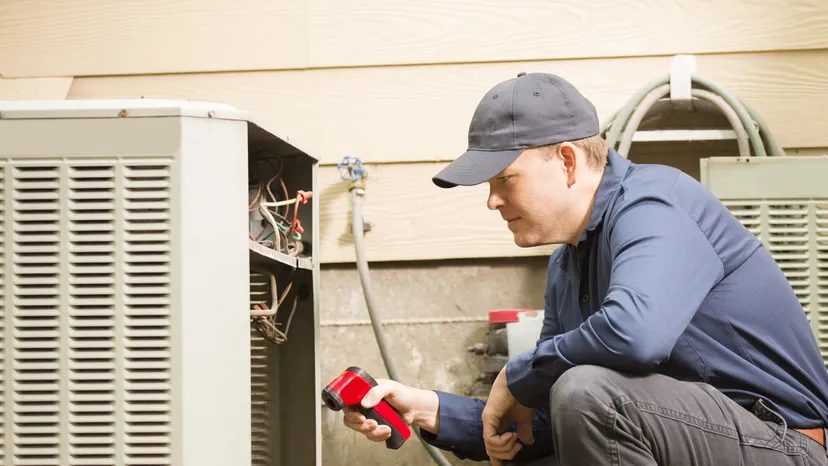
Your central air conditioner runs on two distinct parts, and understanding where they live is the first step to keeping your home cool. The condenser sits outside, usually bolted to a concrete slab, while the evaporator coil is hidden indoors, mounted in the plenum or main duct junction right above your furnace. Most homes wire these systems to the existing forced-air distribution network. That means the same blower motor and ductwork that push heated air in winter are responsible for distributing your cold air in summer.
When the unit kicks on, the blower pulls hot air from the house through the return-air duct. It pushes that air across the chilled evaporator coil in the plenum, strips the heat, and sends the cooled air back out through your supply ducts. If your compressor is humming but the house stays warm, the issue rarely lies with the cooling components themselves. It’s usually the distribution system failing to move the air effectively.
Safety First: Cut the Power Before You Touch Anything
Before you remove a single cover or clean a single filter, kill the power. Central air systems draw electricity from two sources: the outdoor condenser and the indoor evaporator assembly. You need to shut off both. Locking out the breaker is non-negotiable. Working live on these systems isn’t just risky; it’s dangerous.
What You Can Actually Fix Yourself
Here is the reality: both the evaporator and condenser are sealed, pressurized systems. That means you cannot open them, leak-test them, or recharge the refrigerant. If you suspect a refrigerant leak or internal component failure, call a professional. There is no DIY fix for that.
However, “maintenance” isn’t the same as “repair.” You can perform specific routine tasks that prevent efficiency loss and extend the life of your equipment. You just have to know the difference between cleaning and fixing.
Pre-Season Checks and Routine Upkeep
Don’t just wait for the first 90-degree day to inspect your gear. A professional should inspect and adjust your system before the cooling season begins. But don’t let your involvement stop at handing over a check for the annual checkup. There are specific maintenance procedures you can handle yourself to keep the system running at peak efficiency.
Focus on the parts that interact with your indoor air:
– Clean or replace air filters. Clogged filters restrict airflow, forcing the blower to work harder and potentially freezing the evaporator coil.
– Keep the outdoor condenser clear. Remove leaves, grass clippings, and debris that block airflow around the outdoor unit.
– Check the condensate drain. A clogged drain line can cause water damage to your home.
These tasks aren’t complicated, but they are critical for performance. If your house isn’t cooling despite a running unit, look at the ductwork and airflow before assuming the compressor is dead. The problem is probably in the distribution system, and that’s often where a homeowner can make a tangible difference without needing a licensed technician.