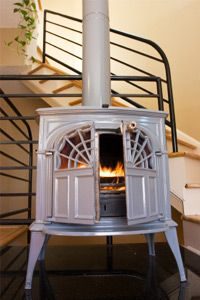
Building a wood-burning stove from scratch sounds like a recipe for disaster. It’s not. With a clean 55-gallon steel barrel, a jigsaw, and some basic hardware, you can construct a functional heat source for a fraction of the cost of buying one. This isn’t about aesthetic perfection. It’s about function. It’s about having a warm room when the power goes out and you have no other choice.
The process is straightforward if you follow the geometry. You aren’t engineering a furnace for a factory. You are modifying a container to hold fire safely. Let’s look at the steps.
Preparing the Barrel and Smoke Exit
Start with a standard 55-gallon steel drum. It needs to be clean. Remove any residual chemicals or debris. Then, cut off the top, which is the plugged end. Keep this metal disc. It will serve as the cooking surface or floor for the stove.
Next, you need to create the flue connection. Take a piece of stovepipe and place it on the top of the barrel, positioning it about an inch (2.5 centimeters) away from the seam. Trace a circle around the pipe. Inside that first line, draw a second circle that is ¾ inch (1.9 centimeters) smaller. This smaller circle is your cutout.
Drill a pilot hole inside the smaller circle. Insert a jigsaw blade and cut out the inner circle. Once the hole is open, you need to create a seal for the pipe. Saw ½-inch (1.3-centimeter) wide lines radiating from the center of the hole to the outer edge of the cutout. These create flexible tabs. Bend these tabs upward with pliers. Slide the stovepipe over these tabs. Secure it with two L-brackets and bolts. This creates a sturdy, vented exit for smoke.
Constructing the Firebox and Door
The firebox is where the wood burns. You need to cut two openings in the barrel wall.
First, identify the top crimped ring of the barrel. On the side opposite the seam, cut a 12-by-8-inch (30.5-by-20-centimeter) rectangle just above this ring. This is your main firebox opening. Below the bottom crimped ring, cut a slightly larger 14-by-10-inch (35.5-by-25.5-centimeter) rectangle. Leave this one open initially. This lower hole manages airflow and ash.
Save the metal you cut out. The larger piece becomes the door for the firebox. The smaller piece is for the draft control system.
Hang the door using an old, worn hinge. Why worn? New hinges don’t expand and contract well under intense heat. They will warp or seize. An old hinge has some “give.” This allows for thermal expansion without locking the door shut.
Create a latch from two L-brackets. Bolt the firebox floor in place using at least six L-brackets around the barrel, just below the top crimp. This reinforces the structure where the door meets the body. Seal the cracks around the edges with aluminum foil. It’s not pretty, but it works to minimize air leaks.
Installing the Draft Control
Airflow is the engine of your stove. You need a way to regulate it. Take the smaller metal piece you saved and cut it to 2.5-by-9-inch (6.5-by-23-centimeter). This is your draft slider.
Mark ½-inch (1.27-centimeter) columns across the width of this piece. Hold it up against the door opening. Drill