You will be surprised to know that your kitchen and laundry room are energy consumers of your home. Together, they can account for up to a third of your household’s total energy consumption. It’s not just your imagination. Heavy-duty appliances such as refrigerators, washing machines, dryers and dishwashers use electricity every day. This reality has many homeowners looking for ways to reduce their carbon footprint and lower their utility bills. At the beginning of this journey, a common debate arises: which uses less energy, an electric stove or a gas stove?
Stoves often go under the radar compared to larger appliances. Energy Star, the US government’s benchmark for greenhouse gas emissions for consumer products, doesn’t even require energy consumption standards for these cooking appliances. They are essentially ignored in the wider efficiency debate. However, the choice of heat source is important. We need to look at how gas, electric and induction cooktops compare. The goal is simple: save money and reduce energy consumption when preparing a meal.
Why a gas stove can perform better than an electric stove
The US Department of Energy estimates that cooking is only about 4.5 percent of the energy we use at home. When you look at the bigger picture of household carbon emissions, this slice is small. For someone strictly focused on minimizing their environmental impact, the choice between gas and electricity may not seem like a pressing issue.
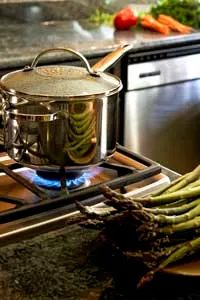
But there are practical differences that are important to the casual cook. Gas burners produce instant heat. As soon as you turn the knob, the flame appears. Electric coils or glass panels take longer to heat up and even longer to cool down. This sensitivity gives gas users more control over temperature adjustments. Thanks to this direct heat transfer, gas burners are usually more energy efficient than electric counterparts in actual cooking.
However, there is a catch. The heat you feel from an electric stove often comes from coal-fired power plants hundreds of kilometers away. The Rocky Mountain Institute points out that this process is inefficient. At a power plant, it takes three to four units of fuel to produce just one unit of electricity that reaches your home. On the other hand, gas stoves are also not environmentally friendly. They connect directly to natural gas lines, which means you’re still burning fossil fuels on site.
However, newer gas models have improved. Those that use an electronic ignition system instead of a constantly lit pilot light use up to 40 percent less gas. This significantly reduces waste. But does cooktop efficiency mean lower bills when you factor in the energy source?
Green cooking methods
If you want to cook more responsibly, you need to look beyond the stove itself. The heating method plays a big role in your overall energy profile. For example, induction hobs change the rules of the game. They use magnetic fields to heat the pot directly, keeping the surface relatively cool. This means that almost all the energy goes into the food, not into the air.
But before you rush out to replace your device, consider the cost. Induction devices are expensive to buy. Gas stoves are often cheaper up front if you already have a gas connection. Electric coils are an affordable option, but lack the precision of gas or induction.
The best choice depends on what you already have installed. Converting your home to induction or gas can cost thousands. If you’re renting, you’re probably have no choice. For homeowners, the decision comes down to long-term savings rather than immediate convenience.
Gas stoves offer instant heat and better control, which makes them more energy efficient in cooking. However, it depends on the energy source. Electric stoves can transfer pollutants to electricity


Induction option for gas
The electric vs. gas range debate often ends with gas winning in performance, but one key factor is being overlooked: the induction cooktop. If you’re looking to reduce your kitchen’s carbon footprint and upgrade your appliances, this is an electric option you need to consider.
Induction does not heat the surface. It uses magnets to agitate metal molecules directly inside your cookware – especially steel, cast iron and compatible stainless steel. Result? Boiling water in minutes. Remove the pot and the surface cools down almost immediately, as heat is only generated where the pot sits.
This is where the efficiency gap lies. Induction transfers about 90% of its energy to the food. Compare that to gas, which releases 60-65% of its heat to the air and only 35-40% to the pan. Even standard electric coils lag behind at 70%. Natural gas simply cannot compete with the direct energy transfer of induction.
The catch? Price. Induction cookers are expensive. Expect to spend between $600 and $4,000 for the standard model. You pay for this efficiency and control.
Cooking methods are more important than the type of stove
You might think that the choice of device is the biggest factor in wasting energy. It isn’t. What matters more is how you cook.
Two people can cook the same meal, but one person can use twice as much energy. It sounds extreme, but it’s true. Covering a pot of water cuts the cooking time in half. Less time on the burner means less energy consumption.
The cooking pot itself also has its own role. Flat-bottomed pans are not negotiable on electric stoves. They require perfect contact with the heating element to transfer heat effectively. If the bottom is warped, you waste energy filling the gaps with heat.
Keep the burners clean. Grease buildup on drip pans under the burners absorb heat. The shiny, clean surface reflects energy back to the pot, which shortens the cooking time.
Small appliances can save energy and money
When heating the kitchen, size matters. Do not light a large oven or large gas burner for a single serving.
For large quantities, use the Dutch oven or stew pot. For smaller tasks, leave the main stove off completely.
A microwave oven is one of the cheapest ways to cook food. It consumes about two-thirds less electricity than a standard electric oven. The downside is that microwaves are better for heating than actual cooking. You won’t get the same browning or texture.
If you want to bake smaller dishes, try a toaster oven. It heats up faster and uses less energy than a full-size oven. It’s a simple swap that adds up over time.
The type of stove you buy is just the beginning. The real savings comes from the way you use it.


加深您的绿色家居知识
如果前面有关环保烹饪和改造您的生活空间的部分激发了您的想法,您可能想更深入地了解这些系统的实际运作方式。 了解电器背后的机械原理是为您的家庭做出更智能、更高效选择的第一步。
HowStuffWorks: The Mechanics of Everyday Tasks
Curiosity about the tools you use every day doesn’t have to be theoretical. Get an in-depth look at the inner workings of common household items that can change the way you use them. For example, understanding how microwave cooking works can reveal why certain ingredients are unsafe and how energy is actually transferred to food. Similarly, understanding how grills work * allows you to control fuel efficiency and heat distribution for better results and less waste.
The same logic applies to laundry and cleaning. By understanding how your tumble dryer works, you can optimize load size and humidity settings, reduce fabric wear and tear, and lower operating costs. Understanding how your washing machine works allows you to choose the right program for your stain, eliminating the need for re-washing and saving water. Even something as simple as how dishwashers work can highlight opportunities to reduce detergent use and water consumption by using the machine efficiently and at full power.
In addition to machines, broader concepts are important. Read how food works and connect your kitchen habits to the wider effects on your health and the environment. At the same time, understanding how carbon dioxide emissions work and how carbon dioxide emissions work provides a framework for measuring and mitigating the home’s overall environmental impact. For those interested in structural change, understanding green roofs opens up possibilities for insulation, stormwater management and urban cooling.
Essential resources for green homeowners
When you’re ready to take action, these organizations can provide you with the information and guidance you need to support your DIY project or remodeling plan.
- Energy Star : The gold standard for energy-efficient products. Use this to determine which appliances, heating systems and windows will give you the best return on your energy bill.
- US Department of Energy : A treasure trove of technical information.
Here you can find detailed reports on residential consumption and energy usage patterns and learn why some upgrades are more important than others.
– TreeHugger : A practical guide to sustainable living. This resource offers practical advice on how to green your kitchen, choose non-toxic materials, and make small changes that have a big cumulative impact.
Where does the information come from?
The insights above are more than opinions. These are based on research by reliable institutions. The American Council for an Energy Efficient Economy has been providing consumers with guidance on efficient cooking methods for many years. US Department of Energy data reveals where homes consume the most energy, and identifies kitchens and laundry rooms as key areas in need of improvement.
The Rocky Mountain Institute provides a detailed breakdown of cooking appliances and dishwashers, providing a technical perspective on efficiency. The Energy Information Administration tracks long-term trends in home electricity use and provides context for daily habits. Food science perspectives like those discussed in the New York Times remind us that the ingredients we choose are just as important as the tools we use. Finally, practical tips from TreeHugger bridge the gap between advanced energy information and practical steps in the kitchen.