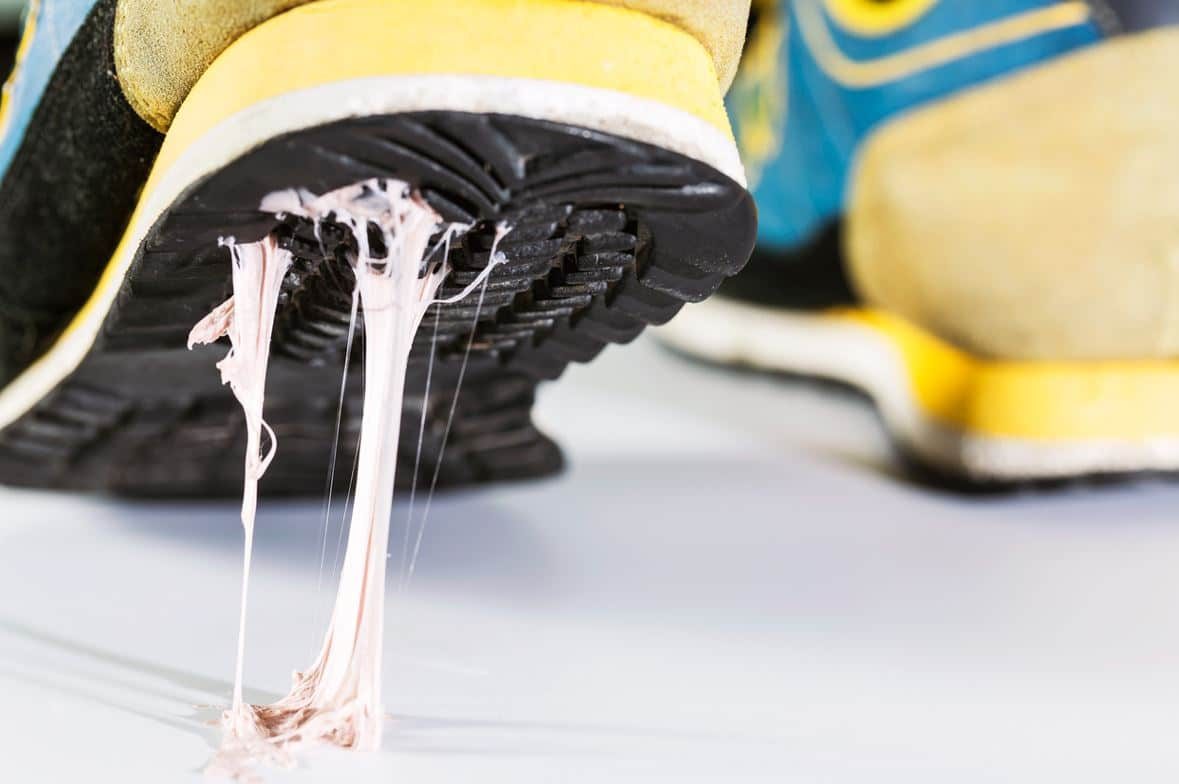
Stepping on discarded gum is a common frustration. I understand how you feel. When I lifted my foot and looked down, there was a black, sticky mass stuck to the bottom of my shoe. The need to scrape it off the nearest curb was strong. It feels very practical. It feels fast.
Don’t do it.
Scraping the concrete only spreads the gum over a large area. When you get home, the chewing gum is deeply embedded in the grooves and treads of the soles. Removal will be a nightmare. You have two options. Leave the sticky residue behind or find a way to get it off. Most people try water. Some try heat. Both often fail.
We have tested and proven 8 different methods for cleaning gum from the soles of your feet. There are no scratches. There are no stains. Only the results.
Зміст
The Freezer Method
This is the most reliable approach for stubborn gum. It relies on physics, not friction. Chewing gum polymers can embrittle at low temperatures. It loses its elasticity. Snap.
What you need:
– A large plastic bag or trash bag
– rubber band
– Access to a freezer
Steps:
1. Place your shoe inside the plastic bag. Seal it tightly. You want to avoid moisture from the freezer air getting into the bag.
2. Put the bag in the freezer. Leave it for at least two hours. The longer you leave it, the more brittle the gum becomes.
3. Remove the shoe. The gum should now feel hard and cold.
4. Take a blunt object. You can also use a butter knife, the handle of a spoon or a sturdy coin.
5. Gently pry the gum away from the sole. It should pop off in chunks. If that doesn’t help, put the shoes back in the fridge for an hour.
This method works because as the gum cools, it contracts slightly, which breaks the bond between the glue and the rubber or leather of the sole. It is very beautiful. This works. And it rarely damages your shoes.
Ice Cube technology
If you don’t have time to wait for freezing, ice cubes offer a faster but manual alternative. The principle is the same. You are trying to freeze the gum so it collapses instead of stretching.
Place the ice directly on the gum. Leave it on for a few minutes. Direct contact quickly transfers cold energy. When the gum turns white and hard, scrape it off with a coin or similar object. Be careful not to damage the soles of your shoes. Use a plastic spatula if you have one. Metal can leave marks on soft materials.
Hair dryer heating
The effects of heat are different from the effects of cold. Doesn’t make your gums brittle. It dissolves it. This can be dangerous. If the gum dissolves too much, it can penetrate deep into fabric or leather. Use this method with caution.
What you need:
– Hair dryer
– Paper towel or old rag
– Dull weapon
Steps:
1. Set the hair dryer on high heat. Hold it about 6 inches away from your gums.
2. Move the dryer back and forth. Don’t focus on one place. Do you want to warm your gums?
Frozen chewing gum solids
If you have time and a freezer, start by placing the gum-stained shoes in a plastic bag and sealing it. Put in the fridge to set for about an hour. The cold can cause chewing gum to become brittle. When you pull it out, the block should pop out easily.
The ice cube method
No freezer space? Skip the bag. Rub a handful of ice directly on the gums. Wait a few minutes for the cold to settle. Chewing gum hardens quickly. Put the gloves on and then pick it off. No mess, no waiting for appliances.
WD-40 is here to help
There’s a reason WD-40 is such a versatile tool. Spray directly onto stuck-on residue. Leave on for 1 minute. Take the back of a spoon or flat spatula and scrape away the softened gum. It works instantly. Afterwards, wipe off the excess oil to prevent the shoes from being sticky.
Acetone and solvents
If you want to remove stubborn sticky residue, use acetone or a special nail polish remover. Dampen a paper towel and rub the spot. Solvents destroy the adhesive properties of chewing gum. It usually comes off quickly. But be careful. If your shoes are suede or nubuck, skip this step. Acetone destroys these materials. Use synthetic materials or leather that can withstand harsh chemicals.
Olive Oil for Gentle Removal
Olive oil works wonders if the gum is not deeply embedded. It is gentler than solvents. You need to apply a generous amount and rub it in. The fat content of the oil breaks up the stickiness. Although it requires more effort, it protects delicate materials from harsh handling.

6. Abrasive peeling method
Sometimes the simplest tools work best. A stiff bristled brush is your friend. Don’t worry if the gum sticks tightly. It breaks the bond. Use energetic circular motions. Friction removes residue.
But don’t do it. First we check the materials.
Do not rub the top of the shoe. Wear of fabric and suede. Attach it to the bottom. If you can wipe it out, do it. The gum will eventually give way.
7. Peanut butter as a lubricant
This sounds strange. it works.
Apply peanut butter to the gums. Leave it as it is. 10 minutes is enough. The oil in the nuts acts as a lubricant. Softens sticky substances. When the time is up, pull squeeze. It should come off in clumps. Wear gloves. You don’t want to eat your shoes afterwards.
If debris remains, use solvent. Or scrub again with a stiff brush.
Don’t forget to clean the peanut butter. The remaining oil attracts dirt. My shoes slip on the floor. It also attracts ants. Clean thoroughly.
8. Sand for natural adhesion
Sand is cheap and effective. Chewing gum is most effective if it is still fresh. Dry gum is difficult to remove.
Do you want to step on the sand? Cover with chewing gum. Press. Wait. Allow the sand to absorb the water and oil from the gum. Usually a few minutes is enough.
Collect stones and sticks. Carefully remove the gum. It should swell with the sand. Pellets help break the seal. This is a natural way to remove debris and dirt without chemicals.