Every July the fear returns. The thermometer rises, the humidity rises and the familiar fear spreads among the gardeners watching the tomato leaves curl. You know the scenario: You’re staring at rot spreading across your precious vines as the sun beats down relentlessly. It feels like a losing battle against the vagaries of nature.
But there is a way to survive the peak of summer without losing your harvest.
It’s not magic. It’s not an expensive device or a rare land improvement. It’s a simple, cross-generational practice known as the “three-guardian rule.” Apply these three measures by the weekend and your garden will have a defense system to ward off heat waves and fungal invaders.
Here’s how to break it down.
Why your garden is sensitive to summer stress
Heat is not the only enemy. The real danger is the combination of extreme temperatures and stagnant humidity. As the weather warms and water sits on the leaves overnight, you create a petri dish for cryptogamic diseases. Powdery mildew and powdery mildew thrive in this environment.
In poorly maintained gardens, one week of neglect can result in a 30% loss of vigor. The tomatoes are wilting. The salad becomes bitter. Leaves turn yellow and die.
The mistake most homeowners make is to respond too late. You wait until the first signs of damage appear. By then, the damage is already done. The key to this is prevention. You need to act before the heat wave hits. Before the fungal spores settle.
The logic behind the Three-Guardian Rule
This trio is not complicated. It is based on basic agricultural science and careful observation. It mimics the self-regulatory systems found in healthy, traditional ecosystems. The goal is to create a microclimate that protects the plants instead of stressing them.
Three pillars are special:
1. Mulch the soil to lock in cool moisture.
2. Air out the foliage to kill fungal habitats.
3. Water early in the morning to maximize absorption and minimize evaporation.
Each phase deals with a specific threat. Together they form a protective shield. Let’s look at the first line of defense.
Mulching: a thermal blanket for your garden
The first gesture is perhaps the most critical. They must cover bare ground. Bare ground is bare ground. It absorbs heat directly from the sun and raises the temperature in the root zone to a dangerous level. It also dries out quickly, so you need to water more often.
Mulching changes that dynamic completely.
How It Works
Organic mulch – be it straw, wood chips, shredded leaves or grass clippings – acts as an insulator. It keeps the earth cool during the day and warm at night. More importantly, evaporation is greatly reduced. Once the bed is covered, you can water only half as often.
It also suppresses weeds. Weeds compete with vegetables for water and nutrients. A thick layer of mulch blocks the light they need to germinate and grow.
What to use and how to use it
Just don’t throw anything on the floor. Avoid applying fresh wood chips directly to the surface if they are high in nitrogen, as they can temporarily tie up nutrients in the soil. Search instead for:
* Straw or hay: Light and perfect for a vegetable bed.
* Shredded Leaves: Abundant and plentiful in the fall, but work well year-round when finely shredded.
* Compost: Add nutrients while covering the soil.
Apply a layer about 2-3 inches thick. Maintain a distance of a few inches from the stems of the plants to avoid rot and disease at the base. This gap allows air to circulate exactly where the plant touches the ground.
“Milching doesn’t just mean a neat appearance, but creating a stable environment for the plant’s roots.”
Long-term benefit
As organic mulch breaks down, it nourishes the soil. It adds organic matter, improving structure and water retention. They don’t just cover dirt; They create the basis for the next season’s harvest.
This is the first watch. It is resistant to heat and weeds. The next step concerns the air itself.
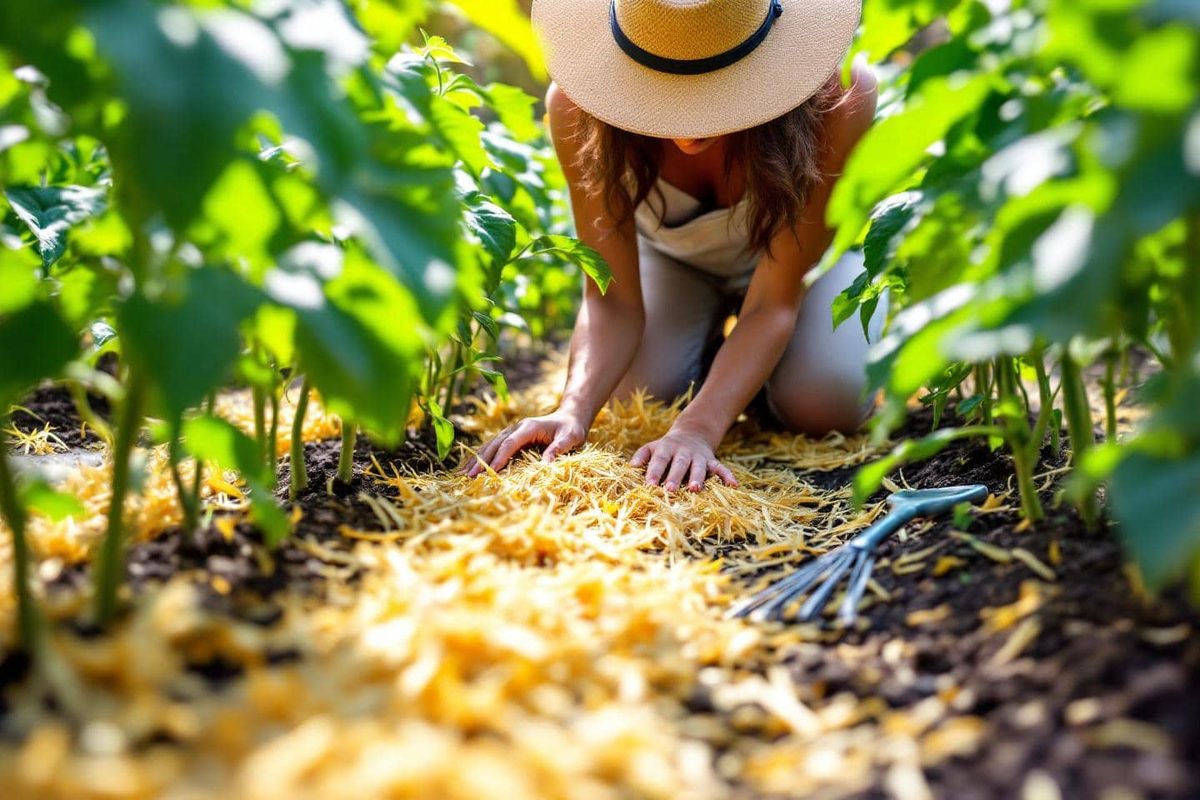

Mulch is not just a blanket. It turns the soil into a refuge for roots. This method, borrowed from old-school market gardeners, is making a comeback. It stacks up benefits for the gardener.
Choosing the right mulch for soil preservation
There is a lot of choice out there. Pick a material that fits your local climate and soil type. Natural options are best. Straw, dry grass clippings, and BRF (crushed branch wood) are top picks.
Wood chips, fallen leaves, and pine bark are classics too. In some French regions, ferns are preferred because they repel slugs. The goal is the same everywhere. Keep the earth moist and cool. Evaporation doubles in direct sunlight during heatwaves.
How to apply mulch effectively
Start when the soil hits 20 °C. Spread a 5 to 8 cm layer around the plants. Do not pack it down tight. You need natural air circulation.
Timing matters. Apply it after rain or a deep watering. This locks moisture in. Check it regularly. Adjust the thickness. Pull weeds. Top it up every two weeks if needed. It saves you from constant watering chores.
Unexpected benefits of mulching
It feeds the soil as it breaks down. This adds precious organic matter for microfauna. It also stops weeds from germinating. You might cut weeding time by 80 percent.
It protects against storm runoff. The soil stays soft underneath. This helps hungry crops like tomatoes and squash. It is part of a long tradition of eco-friendly gardening.
Airing out foliage: the secret weapon against disease
Lush gardens look great. But dense growth invites disease. Good airflow lets light and air move through. This cuts down on fungal invasions drastically.
Pruning and thinning to save harvests
Controlled pruning keeps tomatoes, zucchini, and potatoes healthy. Remove low or crowding leaves. It prevents disease. It reduces water competition. It sends more energy to the forming fruit.
Thinning is an old horticultural trick. It yields stronger, better-shaped vegetables. Fewer plants often mean a better final harvest. It has proven itself in many gardens.
Encouraging air circulation at the plant core
Well-aired foliage sees disease risks drop by nearly 60 percent. Cut useless shoots. Remove tomato suckers. Trim leaves touching the ground. Use clean shears.
Space plants correctly from the start. Watch how they grow. This boosts sun exposure and ventilation. It creates an environment pathogens dislike.
Reducing disease risk: mistakes to avoid
Do not water foliage in heat. Wet leaves are fungal playgrounds. Avoid crowding plants. Excess nitrogen fertilizer weakens foliage. It also attracts pests.
Clean your cutting tools between plants. This small detail stops disease spread. Observation is your best defense. Be careful. Watch your garden closely.
Watering early morning: a precious gesture against thirst and fungus
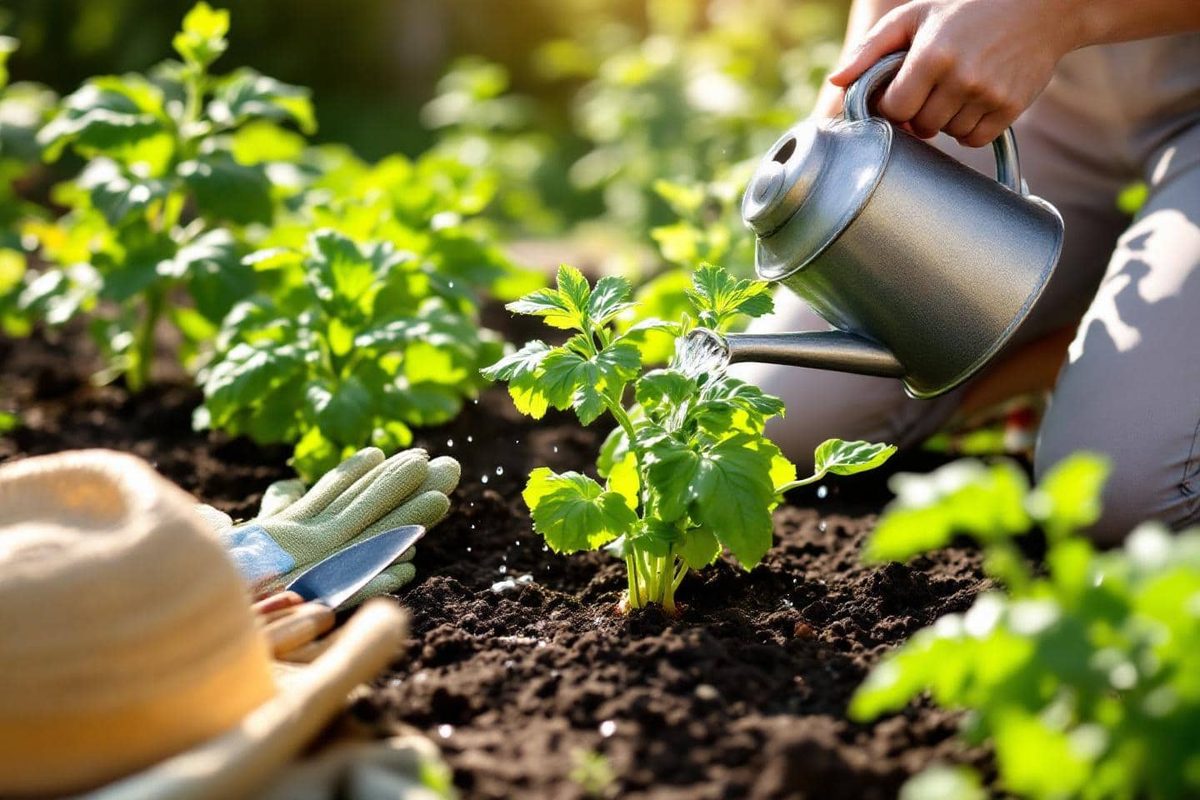
The timing of watering is not just a detail. It is the most effective way to protect plants from summer stress. Early morning watering gives your vegetable garden a real breath of fresh air. It protects plants from the harsh reality of high heat.
Why early morning ** makes a difference**
At the first light of day, the dew evaporates lightly. The leaves are dry. Temperatures are mild. Morning watering gives the roots time to absorb water before the peak of heat. Result? Dynamic growth and limited water stress.
In the morning, evaporation decreases by about 60% compared to the afternoon. This is also the best way to prevent evening humidity from promoting unwanted fungal growth. This common practice in the Mediterranean region makes sense wherever there is a threat of drought.
Prioritization techniques for a ** thriving vegetable garden**
Water from the base, avoiding the spreading of the leaves. It is the most effective method. By using a watering can with a fancy rose or a drip irrigation system, you can apply a precise amount of water, eliminating waste.
Here’s a simple guideline: 10-15 liters of water per square meter per week is sufficient for most crops. Adjust according to the weather. Avoid split applications. This promotes deep root formation and better resistance to summer drought.
Limit evaporation and promote plant health
Morning watering helps to “lock” moisture in the soil. It optimizes every drop. This trick limits the formation of crusts on the surface and keeps the soil alive, full of worms and micro-organisms.
The combination of mulch + aeration + morning watering leads to stronger plants. They are less prone to diseases. Yields are often higher.
The trio in action : Your garden is ready for summer
By taking these three steps, you will gently change your habits. It guarantees beauty and fullness, even in the hottest times. Synergy turns treatment into a pleasant and highly rewarding routine.
Tailor these three measures to your gardening style
You don’t need the whole weekend. Thirty minutes, arranged early in the day or after a rain shower, is sufficient for mulching, pruning, aerating and watering. Those who prepare their materials in advance find the experience calming and satisfying.
Every activity becomes a pleasant ritual. It can be easily integrated into the daily rhythm. We create a unique connection to your garden. It is also an opportunity to pass on these practices to future generations. This preserves valuable knowledge of responsible gardening.
Identify and fix minor setbacks during the season
Vegetable soil is not static. It lives in the rhythm of seasons, surprises and sometimes accidents. Early disease appearance, wilted leaves or slower growth require immediate adjustment.
By thickening the mulch layer, aerating a forgotten branch or adjusting the watering time, you can restore the balance quickly. Regular attention and observation have a long-term effect.
Visible results: a productive, sustainable and water-saving garden
According to the three rules of action, the effects are visible to the naked eye. The ground remains soft. The fruits are less spotted. Harvests are more generous. Water savings can be up to 40% compared to standard management. This contributes significantly to saving natural resources.
Best of all, the garden becomes a model of sustainability. It withstands heat waves and sudden diseases where many others fail. This balanced approach, which combines ancestral knowledge and environmental awareness, enables successful farming while taking into account the cycles of nature.
By following the three-step rule—mulch, aerate the soil, water early—any gardener can turn their small plot into an oasis, even in the middle of a heat wave. How about giving it a try this weekend? Your vegetable garden can become a model of success in your neighborhood.