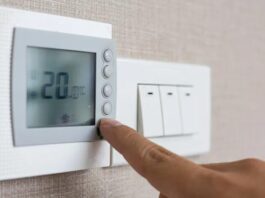
Your thermostat says seventy degrees. The fan is spinning. But the air coming out of the vents feels like it was chilled in a walk-in freezer.
This is not normal.
Electric furnaces are simpler than their gas-fired cousins. There is no pilot light to relight. No gas valve to adjust. No burners to clean. If your electric furnace is running but not heating, the problem is usually electrical or mechanical rather than a fuel delivery issue.
Before you call a pro, check these specific points. Most homeowners can resolve the issue with a multimeter, a screwdriver, and a willingness to look where they shouldn’t.
The Thermostat Isn’t the Problem
It sounds obvious. But most people assume the thermostat is broken when the heat fails.
In an electric furnace, the thermostat is just a switch. It closes the circuit. It asks for heat. The furnace either complies or it doesn’t.
If the fan is running, the thermostat is sending power. The issue is downstream. You have already confirmed the power is getting to the unit.
Stop blaming the thermostat. Look at the unit itself.
Step 1: Check the Circuit Breaker
Electric furnaces draw a lot of power. Two-pole breakers are standard. They are prone to tripping.
Go to your main service panel. Look for a double-width breaker labeled “Furnace” or “HVAC.”
Is it in the middle? Or flipped to the off position?
If it is tripped, flip it fully to the off position first. Then flip it back on.
If it trips again immediately, do not try again. You have a short circuit. Call an electrician.
If it stays on, the power is restored. Wait ten minutes. The furnace has a delay cycle. If heat still does not blow, move to the next step.
Step 2: Inspect the Air Filter
This is the most common cause of electric furnace shutdowns.
Electric heating elements generate intense heat. They need airflow to dissipate that heat. If the airflow is restricted, the high-limit switch trips. This safety feature cuts power to the heating elements to prevent a fire.
The fan might still run. But the heat will not.
Pull out your air filter. Hold it up to a light source. If you cannot see through it, replace it.
Use a standard 1-inch or 4-inch filter. Do not force a thicker filter into a slot designed for a thin one. You will choke the unit.
Replace the filter. Reset the high-limit switch if your model has a manual reset button (usually red). Turn the furnace back on.
Step 3: Check the Heating Elements
This requires a multimeter and turning off the power.
Safety first. Turn off the breaker. Remove the access panel on the furnace. You will see cylindrical metal tubes. These are the heating elements.
If one is blown, it will look dark or broken inside the metal sheath.
Use your multimeter to test for continuity. Set it to the ohms setting. Touch the probes to the element’s terminals.
A reading of zero ohms means a dead short. A reading of infinity means an open circuit. Both mean the element is dead.
A normal reading